
From Cow to Cup in 14 Days: Why Freshness Matters in Ice Cream More Than You Think

BY DANIEL GOLIK
When you take a bite of ice cream, you likely think about flavor, texture, or maybe even nostalgia. But here’s a question most people never ask: How long ago was the milk in your ice cream actually milk? For many mass-produced ice creams, the answer might surprise you. At Chill-N Nitrogen Ice Cream, we believe that timeline is important—not just for taste, but for quality, transparency, and environmental impact. Let’s explore our “Cow to Cup” journey and why it’s a better model for both you and the planet.
🐄 The Chill-N “Cow to Cup” Timeline (≈ 14 Days)
Here’s what a typical timeline looks like for our milk:
Day 0–2 Milking and Initial Processing: Milk is collected from local dairy farms and quickly transported for pasteurization and safety processing
Day 2–5: Quality Control and Distribution: The milk is tested, standardized, and distributed to local partners
Day 5–10: Delivery to Chill-N Locations: Fresh dairy arrives at our stores within days—not weeks
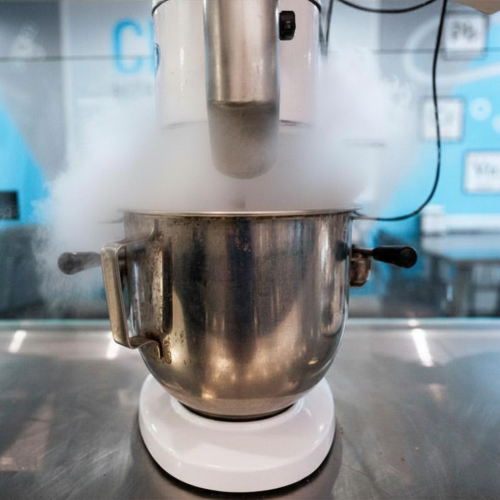
Day 10–14: Made Fresh, On Demand: Your ice cream is mixed, flash frozen with liquid nitrogen, and served immediately
No long-term storage, no sitting in a warehouse freezer, no aging in a tub. From cow to cup, the timeline is roughly two weeks.
🏭 The Reality of Traditional Ice Cream Timelines
Now let’s compare that to large-scale production. Major national ice cream brands focus on mass production, nationwide distribution, and long shelf life. A typical timeline is:
- milk is processed into mix
- frozen in large batches
- stored in industrial freezers
- transported across regions
- stored again in retail freezers
Total time from production to consumption can range from several weeks to several months. According to research on cold-chain logistics, frozen foods often stay in storage for long periods to keep supply consistent. [1] [2]
🛒 Supermarket Ice Cream
Grocery store ice cream adds another layer:
- warehouse storage
- transportation delays
- time on store shelves
It’s not unusual for ice cream to be enjoyed months after production. During that time, texture can degrade (ice crystal growth), flavor can diminish, and freezer burn can occur.
🌍 Planet Care: Why This Model Matters
Freshness isn’t just about quality—it’s about sustainability.
1. Reduced Food Waste: Traditional ice cream waste comes from overproduction, expired inventory, and freezer damage. Chill-N reduces this by making only what’s ordered, which eliminates unsold inventory and avoids long-term storage loss. [3]
2. Less Reliance on Long-Term Cold Storage: The International Energy Agency reports that refrigeration is a major contributor to global energy use. Traditional ice cream depends on constant freezing during storage, refrigerated transportation, and extended freezer shelf life. Chill-N reduces this by minimizing storage time, eliminating warehouse freezing cycles, and producing ice cream instantly.
3. Shorter Ingredient Lifecycles: The longer food is in the supply chain, the more energy, packaging, and handling it requires. Shorter timelines mean fewer resources used, less environmental strain, and more efficient food systems.
🎯 Final Scoop
You don’t have to think about supply chains when you eat ice cream. But maybe you should consider this: Was this made months ago or moments ago? Because that answer affects:
- taste
- quality
- sustainability
- the overall experience
At Chill-N Nitrogen Ice Cream, we believe dessert should be fresh, intentional, less wasteful, and more meaningful.
References
1. Davoudi, Sina, et al. “Two Decades of Advancements in Cold Supply Chain Logistics for Reducing Food Waste: A Review with Focus on the Meat Industry.” Sustainability, vol. 16, no. 16, 2024, article 6986. MDPI, https://www.mdpi.com/2071-1050/16/16/6986
2. National Milk Producers Federation and U.S. Dairy. 2023–2024 U.S. Dairy Sustainability Report. U.S. Dairy, 2024, https://www.usdairy.com/getmedia/a3ba7613-768f-46df-9c21-bb7b9d7ba9a9/2023-24-U-S-Dairy-Sustainability-Report.pdf
3. Parfitt, Julian, et al. “Food Waste within Food Supply Chains: Quantification and Potential for Change.” Philosophical Transactions of the Royal Society B, vol. 365, no. 1554, 2010, pp. 3065–3081. Royal Society Publishing, https://royalsocietypublishing.org/doi/10.1098/rstb.2010.0126
About the Author
Daniel Golik is the Co-Founder and Chief Operating Officer (COO) of Chill-N Nitrogen Ice Cream. In 2012, Daniel Golik, then a senior at the University of Florida, had a wild idea: nitrogen ice cream made fresh to order. He began experimenting with recipes at home and consulted chefs, eventually opening the first Chill-N location in Pinecrest, Florida in 2014. Now with 16 locations across the country, he currently runs operations across all stores and always innovates to make the best ice cream in the world.


get your chill-N 🍦
Try your very own equation in stores or deliver straight to you.
